
Description
The US EIA reported that in 2025, about 29,476 TWh of energy was consumed globally. Of that number about 1.23% is estimated to be attributed to data centres. Globally, data centre companies and hyperscalers have been rapidly expanding their footprint and entering new markets, fueled by the rising demands for AI technologies. This also coincides with larger data centre buildings, increased absolute emissions and higher energy consumption. Higher rack densities for high-performance computing workloads are also driving larger volumes of water withdrawal for cooling. Meeting these demands is of high importance for data centre providers, but with concerns about climate change, energy constraints, and water security, data centres are under scrutiny for their environmental impacts.
Energy availability has become the most important resource in considering new data centre builds. Data centres have been increasingly looking at plots outside of major metros to suburbs and even rural locations in the US. Data centre companies have also been working closely with utility providers to invest in local power generation and infrastructure upgrades. Companies are also going directly to alternative energy sources like natural gas and nuclear to support their new data centres while bringing them to market in a relatively fast timeline. Energy consumption from data centres has seen an increase from 198,746 GWh in 2020 to 362,329 GWh in 2025. Despite the absolute increases in energy consumption, improvements in data centre design and increased rates of carbon-free energy usage has led to reductions in average PUEs between 2020 and 2025. These efficiencies also translate to carbon emissions and water usage, where the absolute volume of emissions and water withdrawal has increased, but the average intensity has actually decreased over the years.
This report is informed by the environmental metrics shared in the ESG and sustainability reports published from various data centre operators and hyperscalers in the industry. We have identified 33 data centre providers and 9 hyperscale cloud companies that have published key environmental metrics for 2024. These 42 companies represent ESG leaders and inform the majority of our data. An additional 5 data centre operators were found to have reported sustainability metrics for prior years but have not published a 2024 report. These five companies were also included to provide a wider understanding of the environmental trends in the industry.
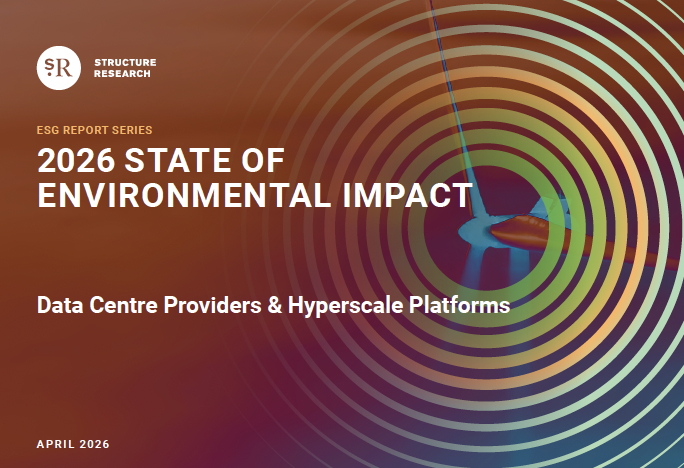
The 2026 State of Environmental Impact report provides insights into the environmental footprint of the data centre industry. This report provides an overview of the environmental impacts of data centres, specifically focused on greenhouse gas emissions, energy consumption, and water usage.